2026-10-12 · Brian Bristol
Dryer Vent Cleaning: Essential Safety Guide
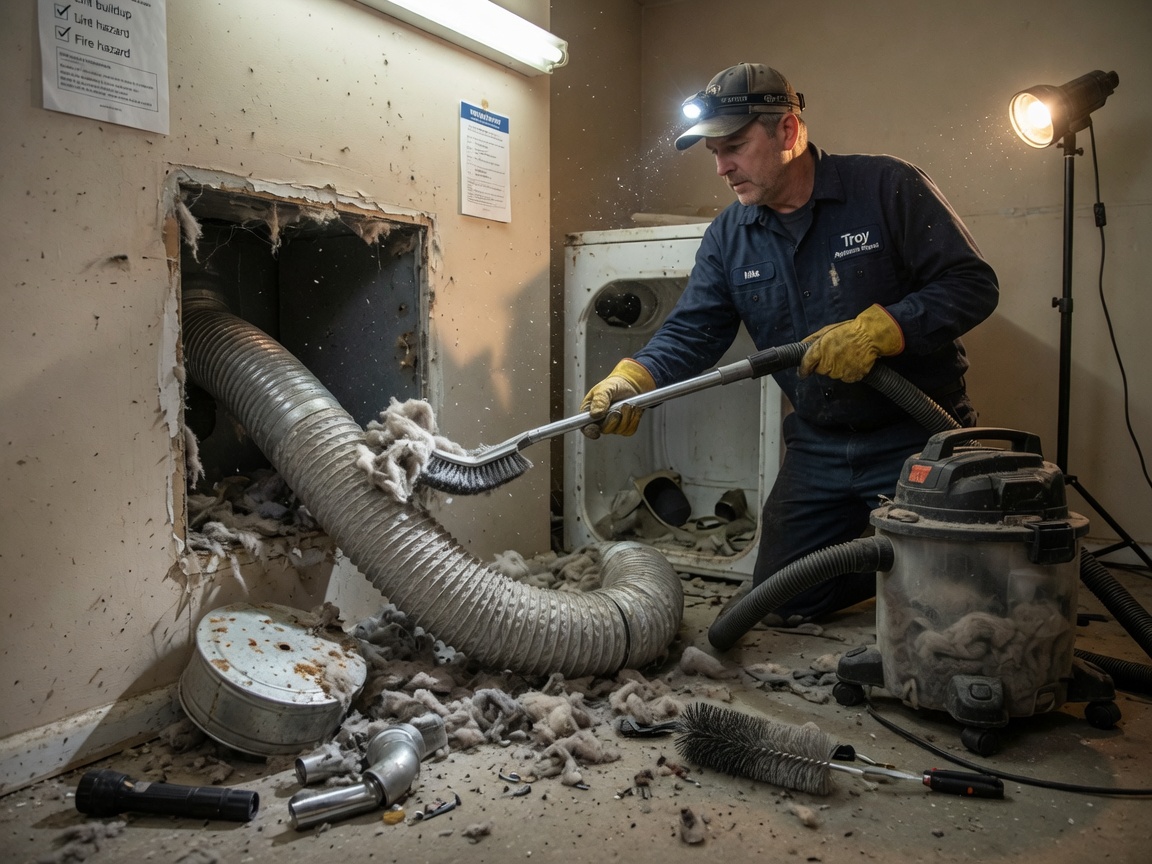
Dryer vent cleaning every 6-12 months prevents the lint accumulation that causes most residential dryer fires in Troy homes. In Oakland County, humid continental winters drive heavier use of indoor appliances from November through March, pushing more lint into vents that run through unheated attics or exterior walls common in Downtown Troy and Big Beaver properties. Homes near Somerset Collection and the Rochester Road Corridor often feature 1970s-1990s construction with 4-inch rigid or flexible ducts that trap moisture and lint faster than newer builds. Regular cleaning restores airflow, lowers operating temperatures, and reduces the chance of ignition at the lint trap or vent termination. Bristol Group, based at 431 Stephenson Hwy, Troy, MI 48083, remains available 24/7 for residents who notice reduced drying times or musty odors after winter.
Fire Risks from Lint Buildup in Cold Climates
Lint is highly flammable and collects rapidly when dryers run longer in Troy's cold winters. Outdoor temperatures below freezing force homeowners in Rochester and Royal Oak to run loads more frequently, sending fine particles through ducts that may pass through uninsulated spaces. In older Oakland County neighborhoods like those near Troy Historic Village, single-story ranches often have longer horizontal runs that allow lint to settle and compact. A single clogged vent can raise dryer exhaust temperatures by 50 degrees or more, creating ignition points at joints or the exterior hood. Residents in Birmingham and Bloomfield Hills report similar issues after heavy snow years when indoor laundry volume spikes. Clearing the vent removes the fuel source and restores safe exhaust velocity. Professional inspection also checks for crushed sections or improper terminations that trap moisture and create hidden fire paths.
Local Housing Factors That Accelerate Clogging
Troy's housing stock along the Rochester Road Corridor includes many split-level and colonial homes with dryer vents routed through basements or crawl spaces that stay damp during spring thaws. These conditions cause lint to stick and harden, especially when combined with the area's clay-heavy soil that keeps foundations cooler. Somerset and Big Beaver properties frequently have stacked laundry rooms on upper floors, creating vertical runs where lint falls back during shutdown periods. Nearby cities such as Royal Oak and Rochester experience the same pattern because their 1980s-1990s subdivisions share similar duct layouts. In these homes, cleaning intervals shorten to every 6-8 months rather than the 12-month average for newer construction. Checking the exterior vent flap for free movement after each season helps catch early buildup before it reaches the 50 percent airflow reduction point that signals danger.
Step-by-Step Safety Inspection Process
Begin by unplugging the dryer and pulling it away from the wall to access the rear connection. Disconnect the flexible or rigid duct and inspect for tears or crushed areas that reduce diameter below 4 inches. Use a vent brush or shop-vac attachment to remove lint from the first 6-8 feet of duct while wearing a dust mask. At the exterior termination, clear the hood and confirm the flap opens fully without sticking from winter ice. Test airflow by running the dryer on air-only for two minutes and holding a tissue at the vent outlet; strong suction confirms clearance. If the tissue barely moves or lint remains after brushing, the blockage lies deeper in the wall or attic run common in Oakland County homes. Document any damaged sections for later professional repair rather than attempting further disassembly.
When Professional Service Becomes Necessary
Persistent lint at the lint trap after cleaning, clothes that remain damp after a full cycle, or a burning smell during operation all indicate the need for professional dryer vent cleaning and repair. Technicians carry specialized rotary tools that reach the full length of ducts in two-story Troy homes where DIY kits fall short. They also verify proper slope and termination height required by local codes in Oakland County. Homeowners comparing options can review DIY vs. Professional Appliance Repair: Key Differences to understand when equipment limitations make self-service unsafe. In neighborhoods near Oakland Mall or along Big Beaver, scheduling during shoulder seasons avoids the winter rush when demand peaks. Bristol Group maintains 24/7 availability from its Stephenson Hwy location to handle urgent cases before they escalate to fire hazards.